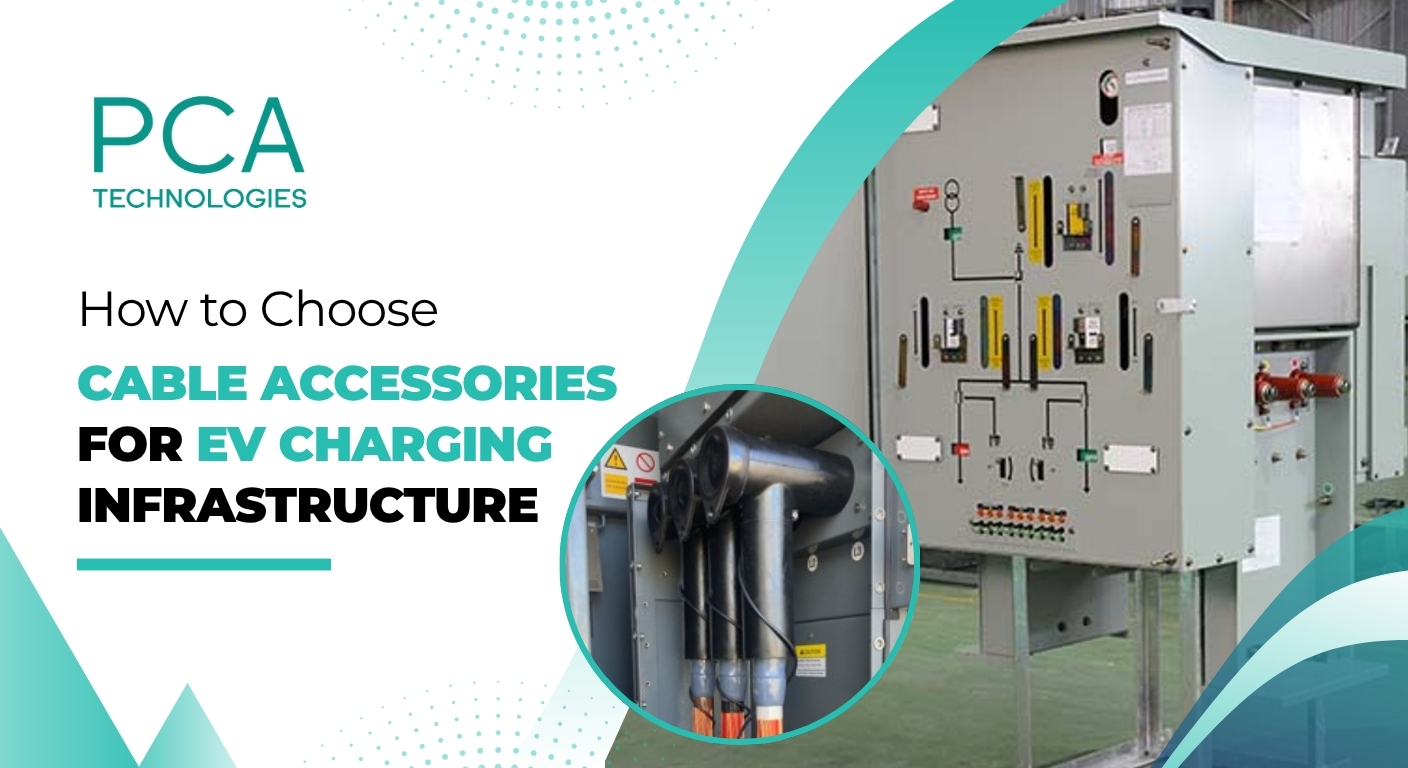
Electric vehicle adoption is growing fast across India, and charging infrastructure is expanding with it. Behind every reliable charging station sits a network of cables and connectors that carry power safely from the grid to the vehicle. Choosing the right cable accessories is not a minor detail. It decides how safe, efficient, and long lasting a charging system will be.
This blog explains what cable accessories are, why they matter for EV charging, and how to select the right ones for your project.
Understanding Cable Accessories in EV Charging Systems
Cable accessories are components that join, protect, terminate, or seal power cables. They include connectors, lugs, glands, joints, and insulation systems. In an EV charging setup, these accessories connect the charger to the power source and manage the flow of current safely.
EV charging systems operate at higher currents than typical household wiring. This means the accessories used must handle heat, vibration, and repeated connection cycles without failing.
Why Power Cable Accessories Matter for Reliability
Power cable accessories are often overlooked, yet they are responsible for most field failures in electrical systems. A loose connector or a poorly rated joint can cause voltage drop, overheating, or even fire. In EV charging stations, where cables carry significant current for extended periods, weak accessories create real safety risks.
Choosing accessories with proper ratings and certified materials reduces downtime and extends the life of the entire charging system.
Key Types of Cable Accessories Used in EV Charging
Cable Glands and Connectors
Cable glands seal the entry point where a cable enters an enclosure or charging unit. They prevent moisture, dust, and vibration from damaging internal wiring. Connectors, on the other hand, join two cable ends or link a cable to charging equipment. For outdoor EV chargers, glands and connectors must resist weather exposure throughout the year.
Cable Lugs and Terminations
Lugs are used to terminate cable ends so they can be securely bolted to terminals inside switchgear or charging panels. A poorly crimped lug increases resistance at the joint, which generates heat over time. This is one of the most common causes of connection failure in high current systems like EV chargers.
Heat Shrink and Cold Shrink Joints
Cable joints protect the point where two cable sections meet. Heat shrink joints use heat to shrink insulating material tightly around the cable, while cold shrink joints use pre stretched material that contracts naturally when installed. Both methods create a sealed, insulated joint that prevents moisture ingress.
Choosing Between Heat Shrink and Cold Shrink
Heat shrink joints are cost effective and widely used, but they require a heat source during installation, which is not always convenient at busy charging sites. Cold shrink joints install faster and do not need open flame, making them a practical choice for congested urban charging stations where safety around tools matters.
Factors to Consider When Selecting Cable Accessories
Voltage Rating and Current Capacity
Every accessory must match the voltage and current rating of the cable it supports. EV chargers, especially DC fast chargers, operate at high power levels. Using an undersized connector or lug, even if it physically fits, can lead to overheating under sustained load.
Environmental Protection and IP Rating
Most EV charging points are installed outdoors or in semi outdoor locations such as parking areas and highway stops. Cable accessories should carry an appropriate IP rating to resist dust and water ingress. IP65 or higher is generally recommended for exposed installations.
Material Quality and Corrosion Resistance
Copper and aluminium components used in lugs and connectors should be manufactured from high purity materials with proper plating, such as tin or nickel, to resist corrosion. In coastal regions or areas with high humidity, corrosion resistance becomes even more important, since it directly affects long term conductivity.
Why Sourcing from Trusted Cable Accessories Manufacturers Matters
The performance of any charging installation depends heavily on the quality of components used. Buying from established cable accessories manufacturers ensures the products meet relevant testing standards and are consistent from batch to batch.
Evaluating Cable Accessories Manufacturers in India
When comparing cable accessories India suppliers, look for manufacturers who provide test certificates, offer technical documentation, and have experience supplying to power utilities or infrastructure projects. Manufacturers with in house testing facilities and a track record in industrial or utility scale projects tend to offer more dependable products than smaller unverified suppliers.
Common Mistakes to Avoid
Some common errors include selecting accessories based on price alone, ignoring voltage compatibility, and skipping proper crimping tools during installation. Even a well made lug can fail if it is crimped with the wrong tool or die size. Site engineers should always follow manufacturer installation guidelines rather than relying on general practice.
Conclusion
Cable accessories may seem like small components compared to chargers or transformers, but they form the backbone of a safe and reliable EV charging network. Selecting the right glands, lugs, joints, and connectors based on voltage rating, environmental exposure, and material quality helps prevent failures and reduces long term maintenance costs.
As India continues to build out its EV charging infrastructure, working with experienced cable accessories manufacturers and choosing components suited to real world conditions will remain essential for every project, large or small.
What are cable accessories used for in EV charging stations?
Cable accessories connect, terminate, and protect power cables in EV charging systems. They include glands, lugs, connectors, and joints that ensure safe current flow between the power source and the charger.
What IP rating is recommended for outdoor EV charging cable accessories?
IP65 or higher is generally recommended for outdoor installations. This protects the accessories from dust, moisture, and weather exposure common at parking areas and highway charging points.
Why is crimping important for cable lugs in EV chargers?
Proper crimping ensures low resistance at the connection point. A poorly crimped lug can overheat under sustained load, leading to premature failure or safety hazards.
How do I choose a reliable cable accessories manufacturer in India?
Look for manufacturers who provide test certificates, follow relevant standards, offer technical support, and have prior experience supplying utilities or industrial infrastructure projects.
What is the difference between heat shrink and cold shrink joints?
Heat shrink joints require heat during installation, while cold shrink joints use pre stretched material that contracts naturally without any flame or tool, making them faster and safer to install on site.